
Topic 6: Distinguish HS From Common Mimickers
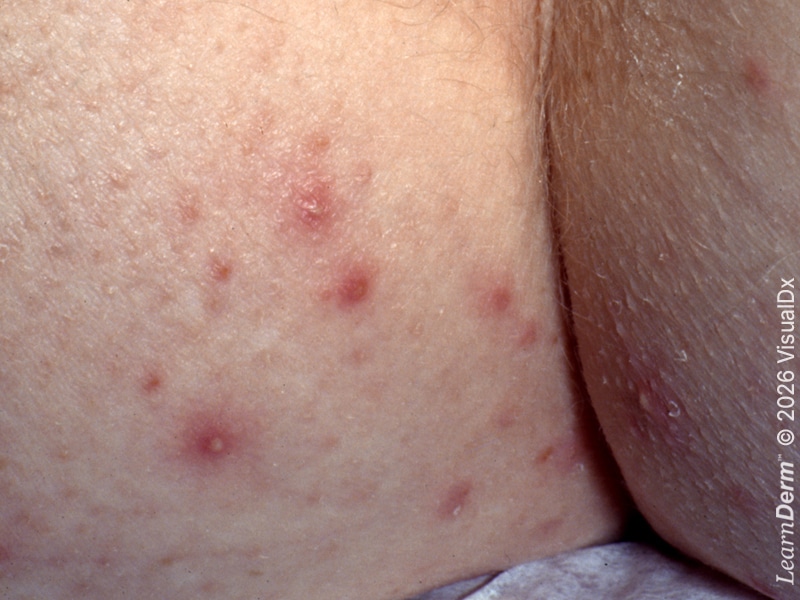
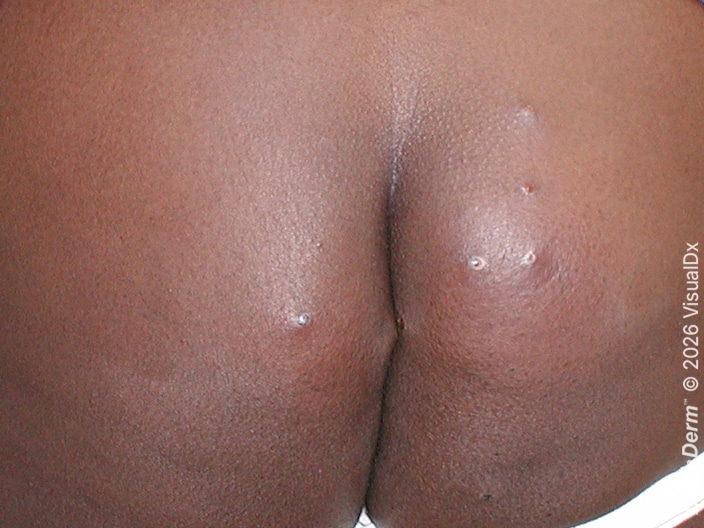
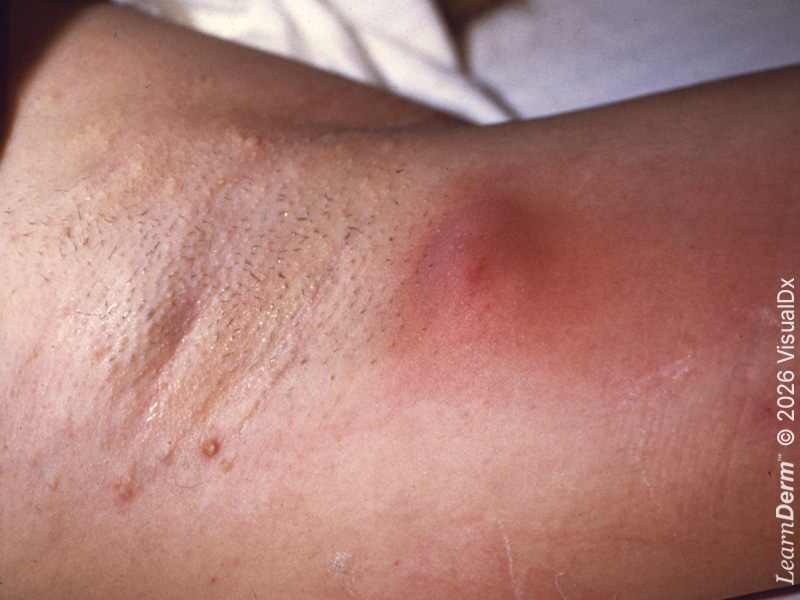
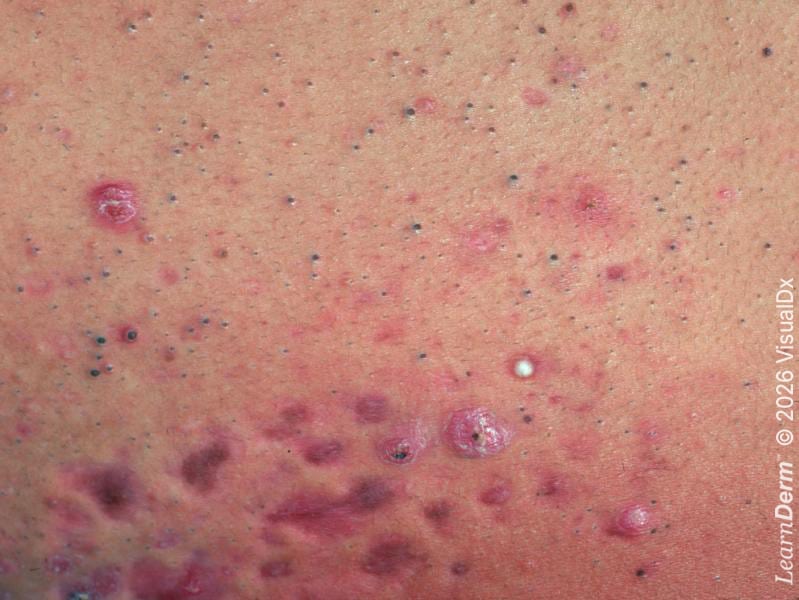
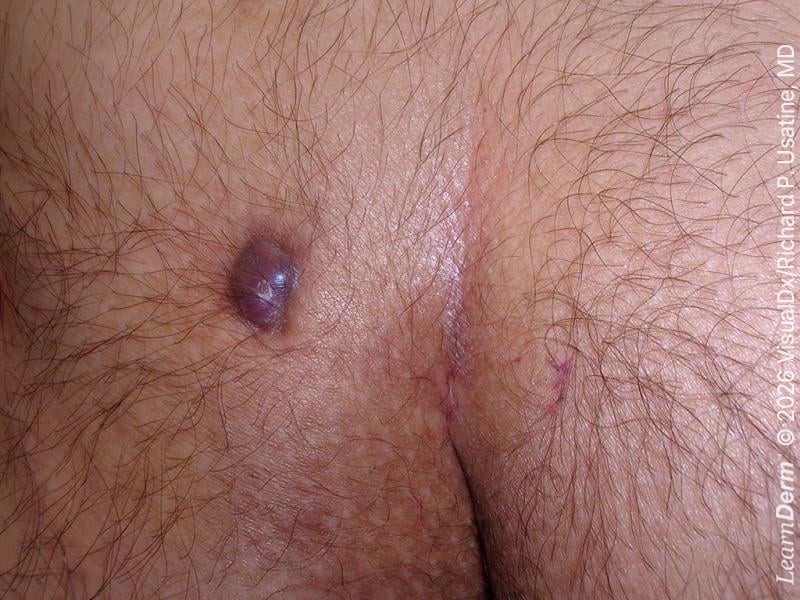
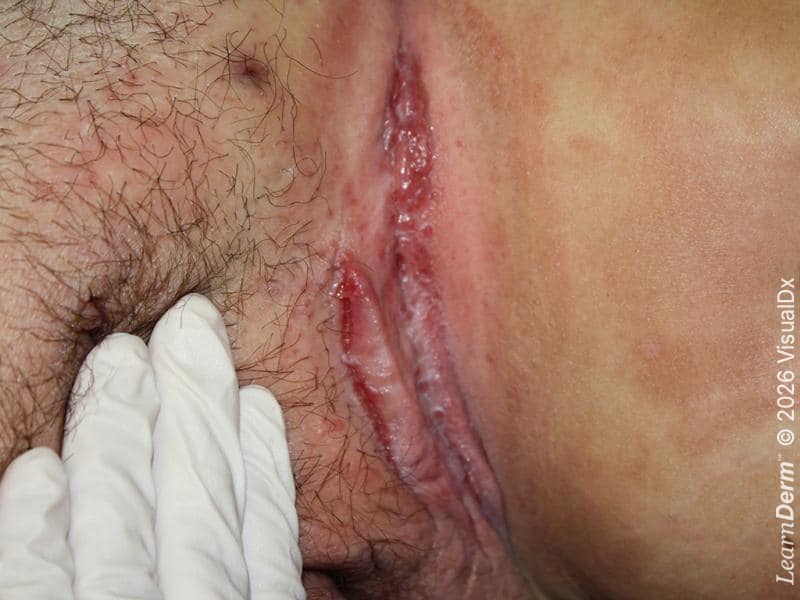
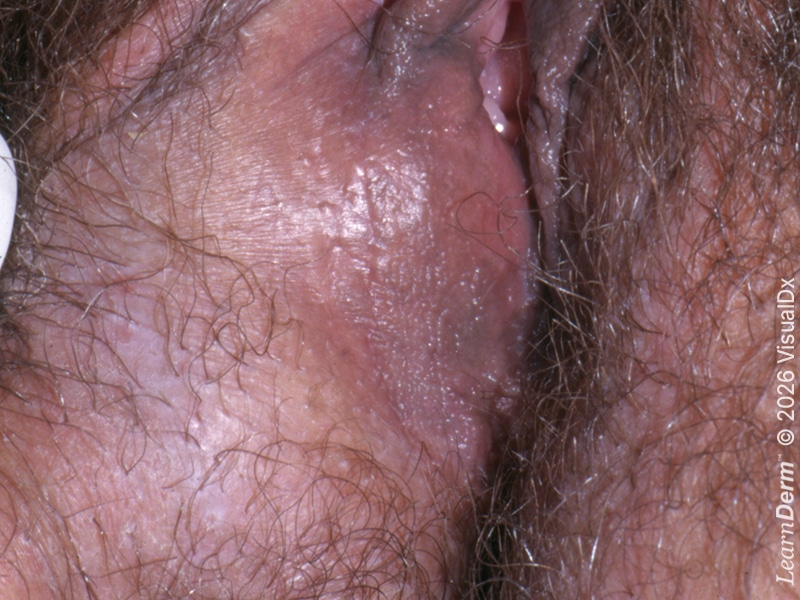
Common differentials include inflamed epidermoid cysts, nodulocystic acne, furuncles, folliculitis, pilonidal disease, perianal Crohn disease, and Bartholin gland disease.2
| Possible diagnosis | May resemble HS | Findings that favor or argue against HS |
| Folliculitis | Follicular papules or pustules | Folliculitis is usually more superficial. Recurrent deep nodules, tunnels, and characteristic distribution favor HS. |
| Furuncle or carbuncle | Painful inflammatory nodule or abscess | An isolated event may be infectious. Repeated lesions, especially in intertriginous sites, favor HS. |
| Inflamed epidermoid cyst | Tender subcutaneous nodule, sometimes with drainage | Epidermoid cyst is often a solitary lesion with a central punctum. Multiple recurrent lesions in characteristic regions favor HS. |
| Nodulocystic acne | Deep nodules, cysts, comedones, and scarring | Predominant involvement of the face, chest, and back favors acne. HS may coexist with severe acne. |
| Pilonidal disease | Painful or draining lesion in the gluteal cleft | Pilonidal disease is usually localized to the sacrococcygeal region. Consider concomitant HS if lesions also occur in other characteristic sites. |
| Cutaneous Crohn or perianal fistulizing disease | Perineal or perianal inflammation and drainage | Specialist analysis of gastrointestinal symptoms and fistula anatomy may be needed for Crohn disease. HS and inflammatory bowel disease can coexist. |
| Bartholin gland cyst or abscess | Painful vulvar swelling | Look for characteristic unilateral location near the vaginal opening in Bartholin gland disease. Broader recurrent inguinal, pubic, or perineal disease favors HS. |
| Diagnostic pitfall: A positive bacterial culture or temporary response to an antibiotic does not, by itself, exclude HS. Secondary infection may occur, and some antibiotics used for HS also have anti-inflammatory effects. |
-

Folliculitis
-

Furuncle
-
Epidermoid cyst
-

Nodulocystic acne
-
Pilonidal cyst
-
Crohn disease
-
Bartholin gland cyst
← Topic 5: Recognize Inflammation Across Skin Tones
Topic 7: Put the Three Diagnostic Clues Together →
This content is sponsored but developed independently with Steven Daveluy, MD, Dermatologist.