
Topic 5: Recognize Inflammation Across Skin Tones
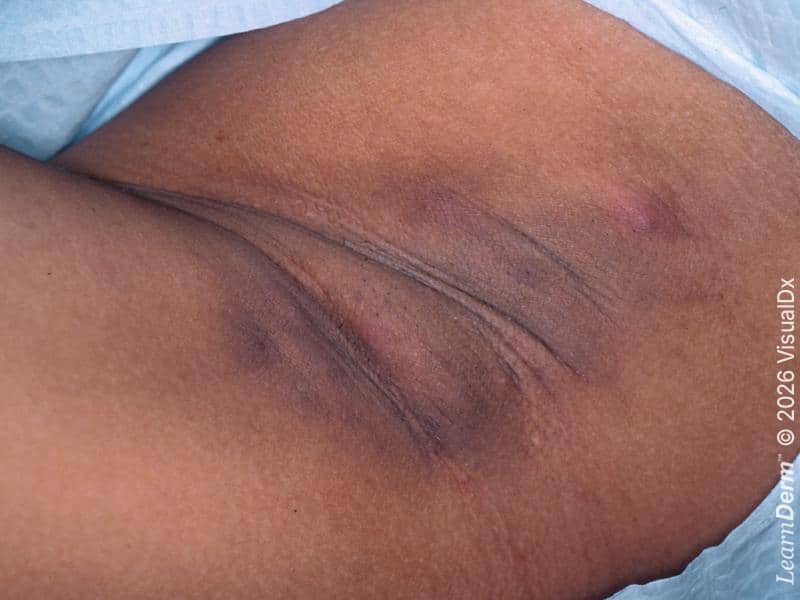
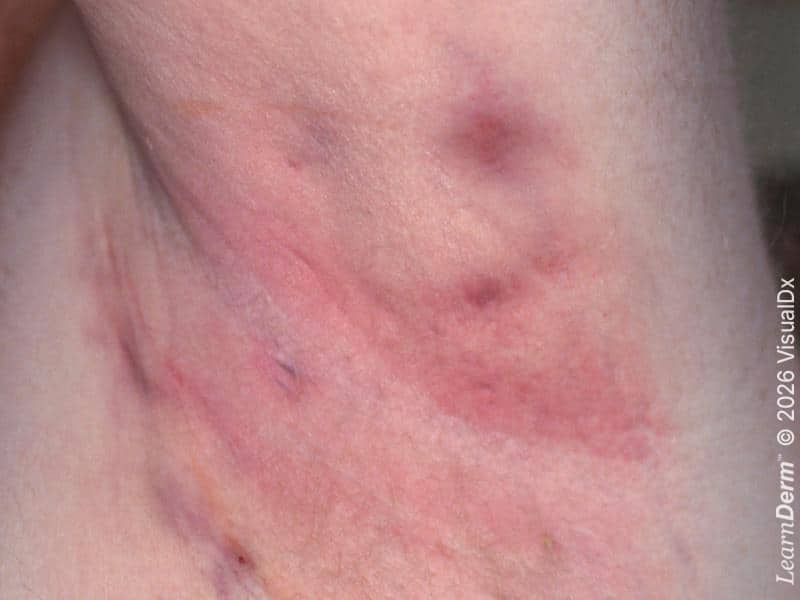
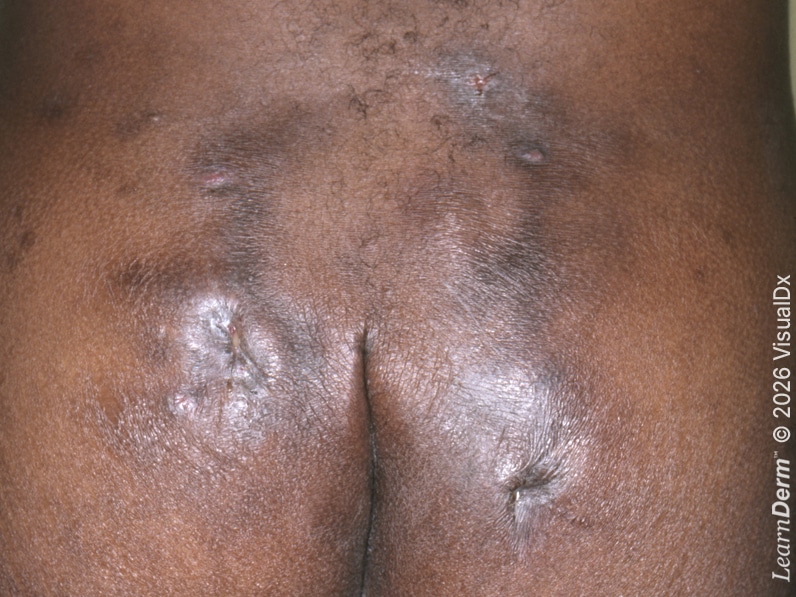
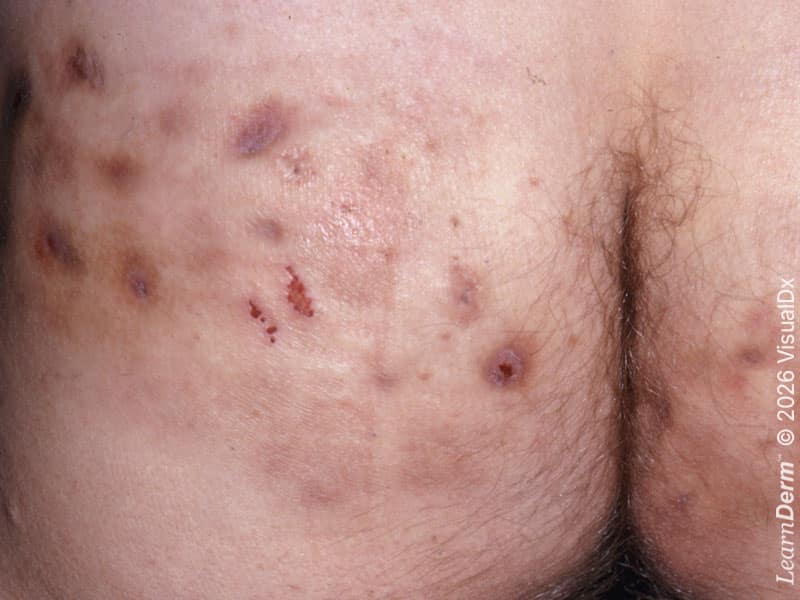
Inflammation presents differently depending on skin tone, and color should not be the only marker used to identify erythema. In darker skin tones, erythema may be less conspicuous or may appear violaceous, gray, dark brown or only subtly different from surrounding skin, whereas in lighter skin tones, inflammation may appear pink or red. Postinflammatory hyperpigmentation can also remain after active inflammation has improved.5
Also assess for:
- Tenderness
- Warmth
- Swelling
- Induration
- Fluctuance
- Drainage
- Surface or textural change
- Patient-reported pain or recent enlargement
This is particularly important when reviewing photographs, because lighting and camera processing may further alter color.
← Topic 4: Recurrence May Be the Most Important Clue
Topic 6: Distinguish HS From Common Mimickers →
This content is sponsored but developed independently with Steven Daveluy, MD, Dermatologist.