Topic 2: Recognize the Characteristic Lesions
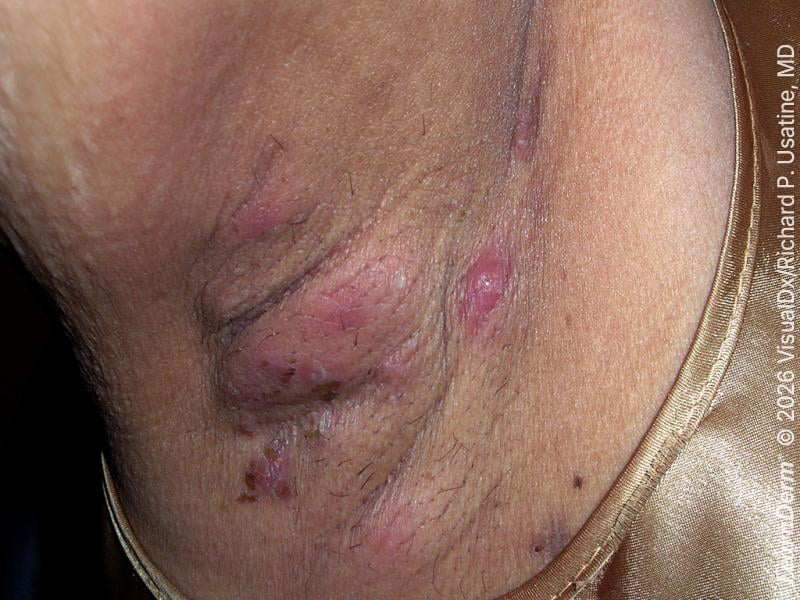
Inflammatory nodules
Inflammatory nodules are among the most common early manifestations of HS. They are generally deep-seated and palpable beneath the skin, tender or painful, persistent for days or longer, recurrent, and sometimes present without obvious surface drainage.2
A nodule may be more clinically significant than its visible size suggests. Palpation may reveal deeper induration or tenderness.
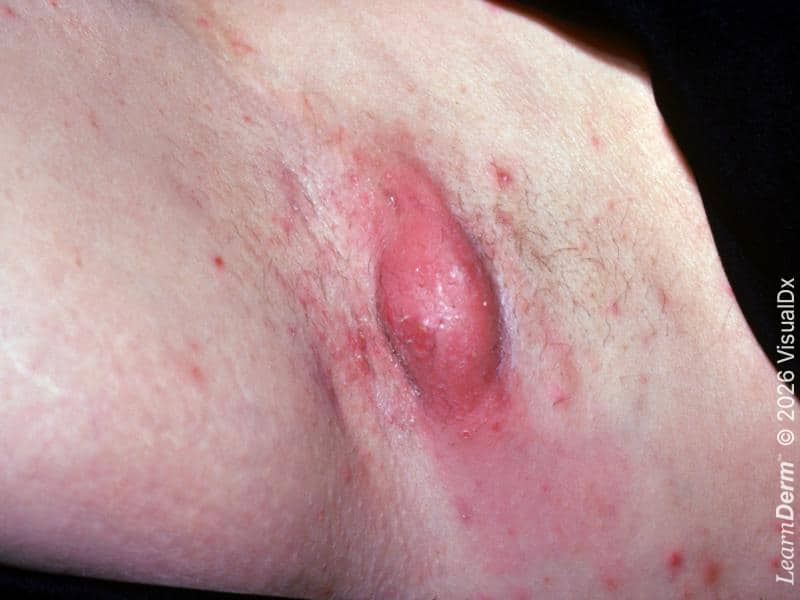
Abscesses
HS abscesses are tender, fluctuant inflammatory collections that may rupture and release purulent or blood-tinged material. Drainage may be malodorous, and the odor or purulent material can lead to misdiagnosis of HS as an infectious process.2
Repeated incision and drainage of lesions without attention to their recurrence, distribution, and surrounding HS findings can contribute to delayed recognition.
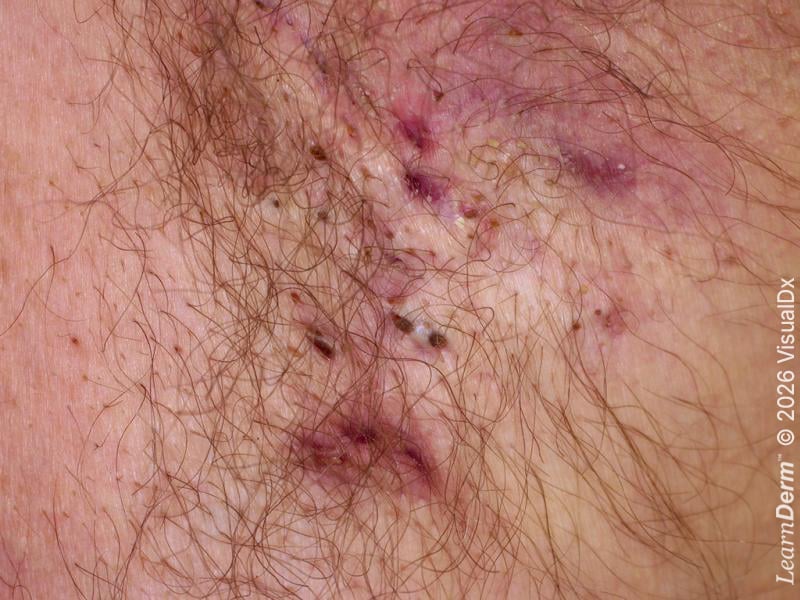
Comedones
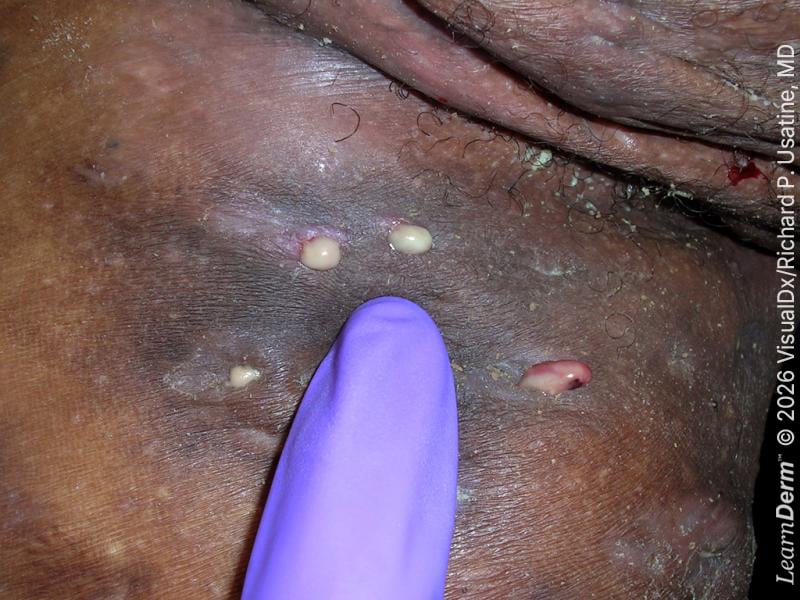
Open comedones may occur in HS. Paired or multiheaded comedones are highly characteristic of HS and uncommon among its common mimickers; their presence, especially in a characteristic location or alongside a recurrent history, should substantially increase suspicion for HS. A comedonal opening may represent evidence of follicular occlusion or an opening associated with underlying disease.3,4
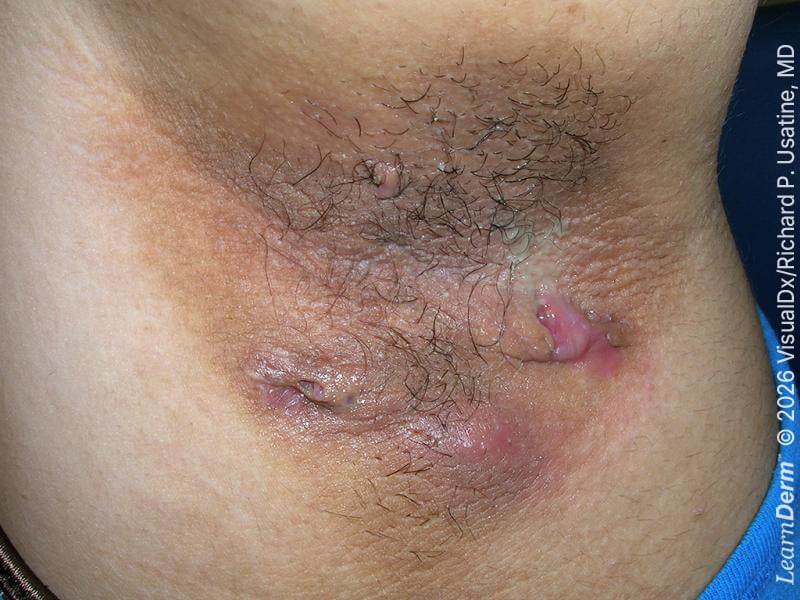
Tunnels and draining tunnels
Tunnels are abnormal channels beneath the skin that may connect inflammatory lesions or open onto the skin surface. They may be palpable as linear or cord-like structures. A draining tunnel has an opening that actively or intermittently releases fluid. Tunnels are important evidence of structural disease, but their absence does not exclude clinically significant HS.3
Scarring
Repeated inflammation may result in:
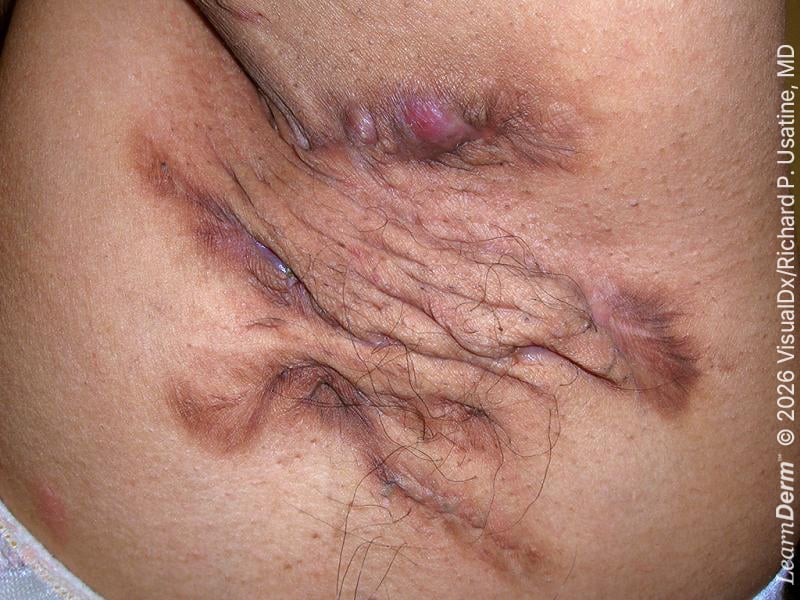
- Atrophic or depressed scars
- Hypertrophic or rope-like scars
- Fibrotic plaques
- Contractures or restricted movement in advanced disease
Scars also provide a historical record. A patient may have few active lesions during the appointment but show evidence of repeated inflammatory episodes.
-
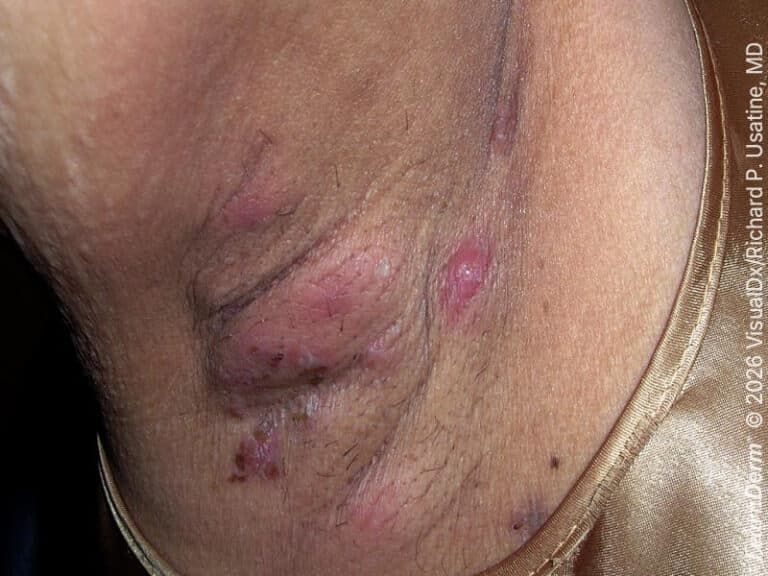
Inflammatory Nodules
-
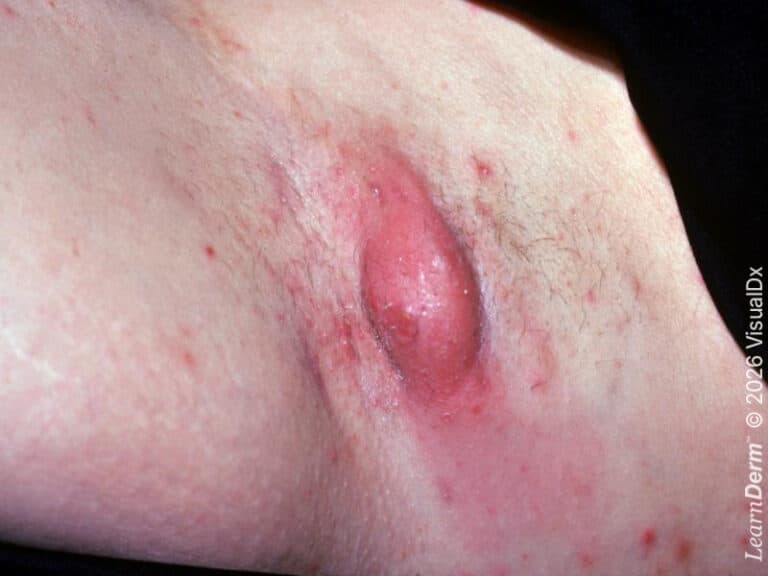
Abscess
-
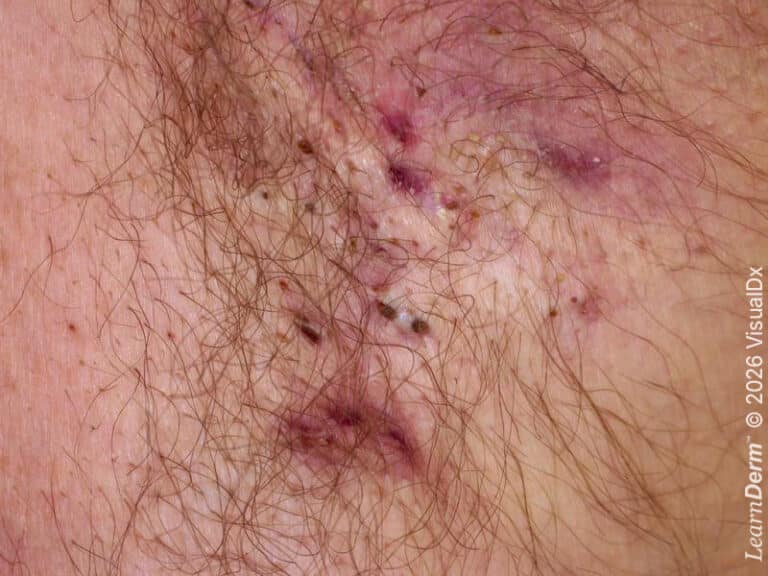
Comedones
-
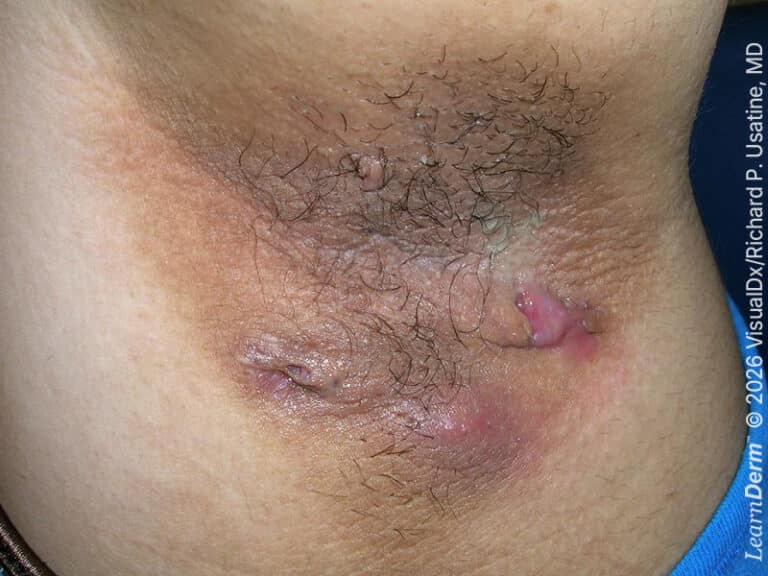
Tunnels
-
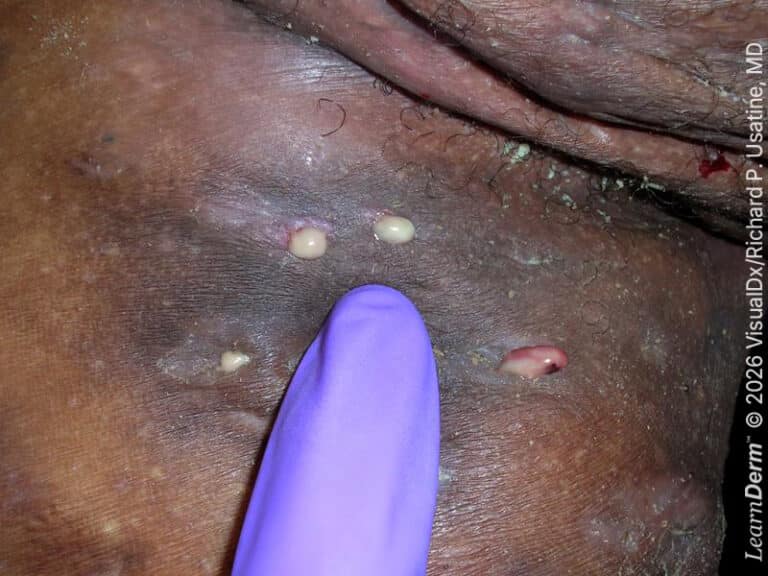
Draining Tunnels
-
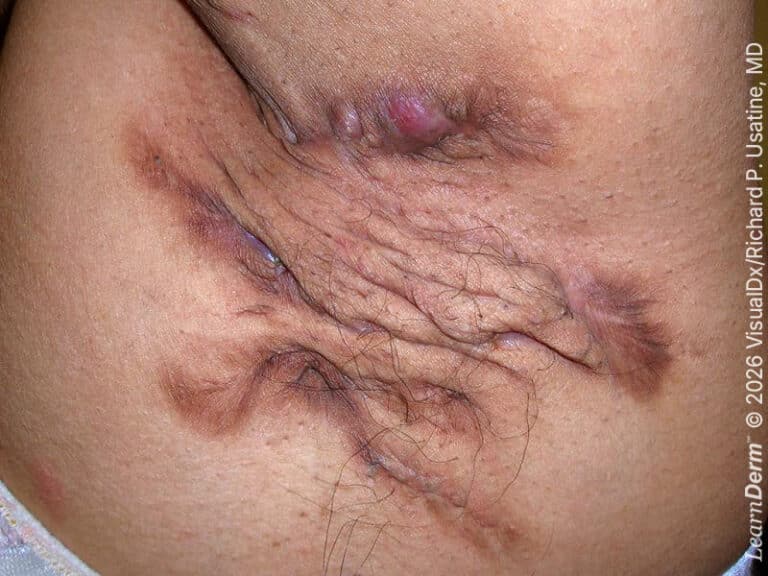
Scarring