Topic 1: What Shared Decision-Making Is and Is Not
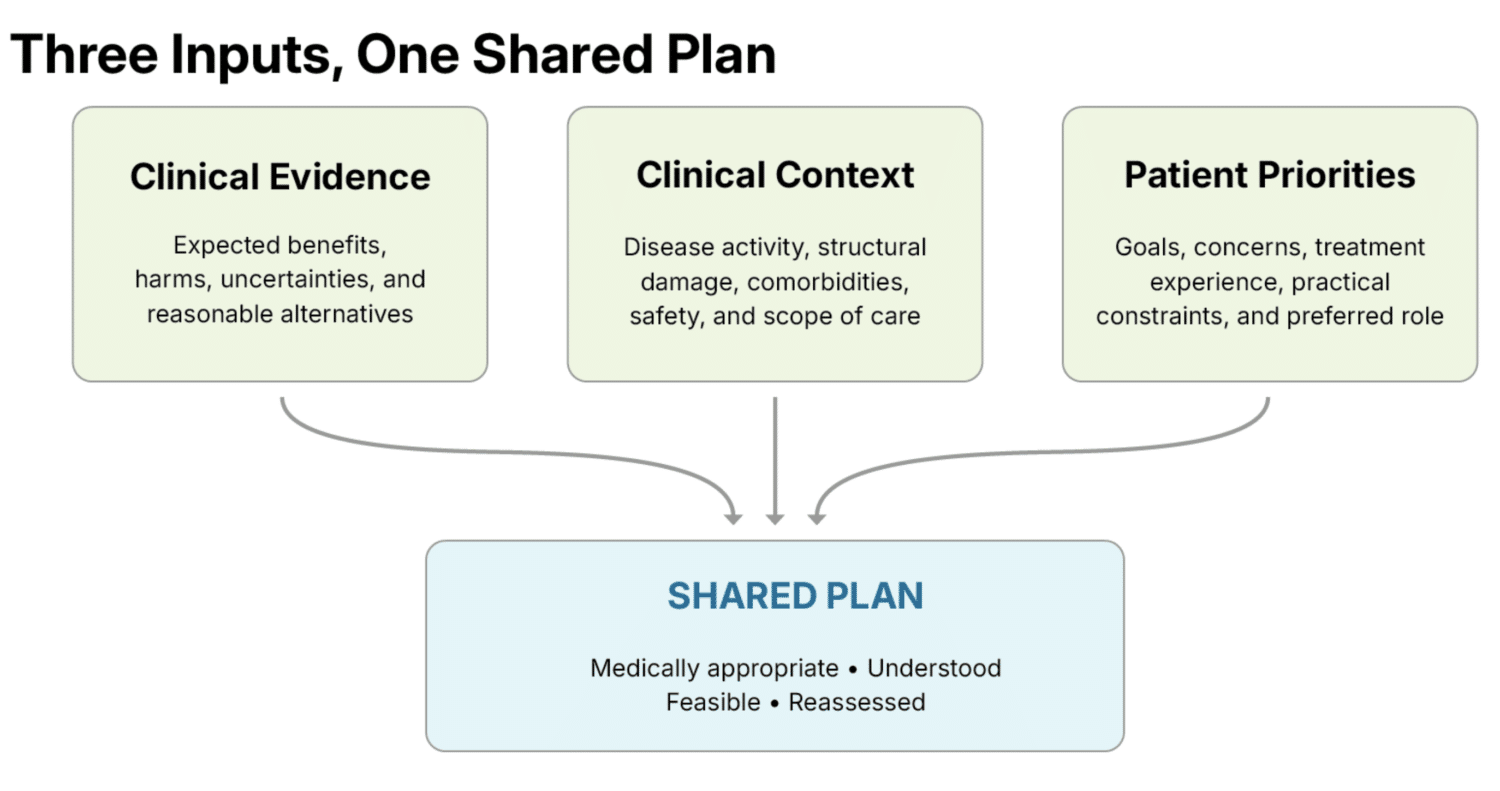
Shared decision-making is a collaborative process for decisions in which more than one medically reasonable path exists. The clinician contributes evidence, recommendations, safety boundaries, and experience; the patient contributes goals, lived burden, preferences, concerns, and practical constraints. Together they select a plan and define how it will be evaluated.
| It is not…: A menu of choices without guidance, persuasion toward a predetermined choice, or transfer of clinical responsibility to the patient. The clinician should still make a recommendation and explain why it fits or does not fit the patient’s priorities. |
In a US qualitative study, treatment selection in HS was influenced by the patient’s threshold for suffering, perceptions of treatment risk, treatment fatigue, understanding of HS, and information sources. These influences may not be visible unless the clinician asks directly.1