Topic 2: Why Hurley Staging Alone Is Not Enough
Hurley staging is one of the most familiar methods for classifying HS. It is simple, quick, and useful for describing the extent of structural disease.
| Stage | Structural pattern | Key distinction |
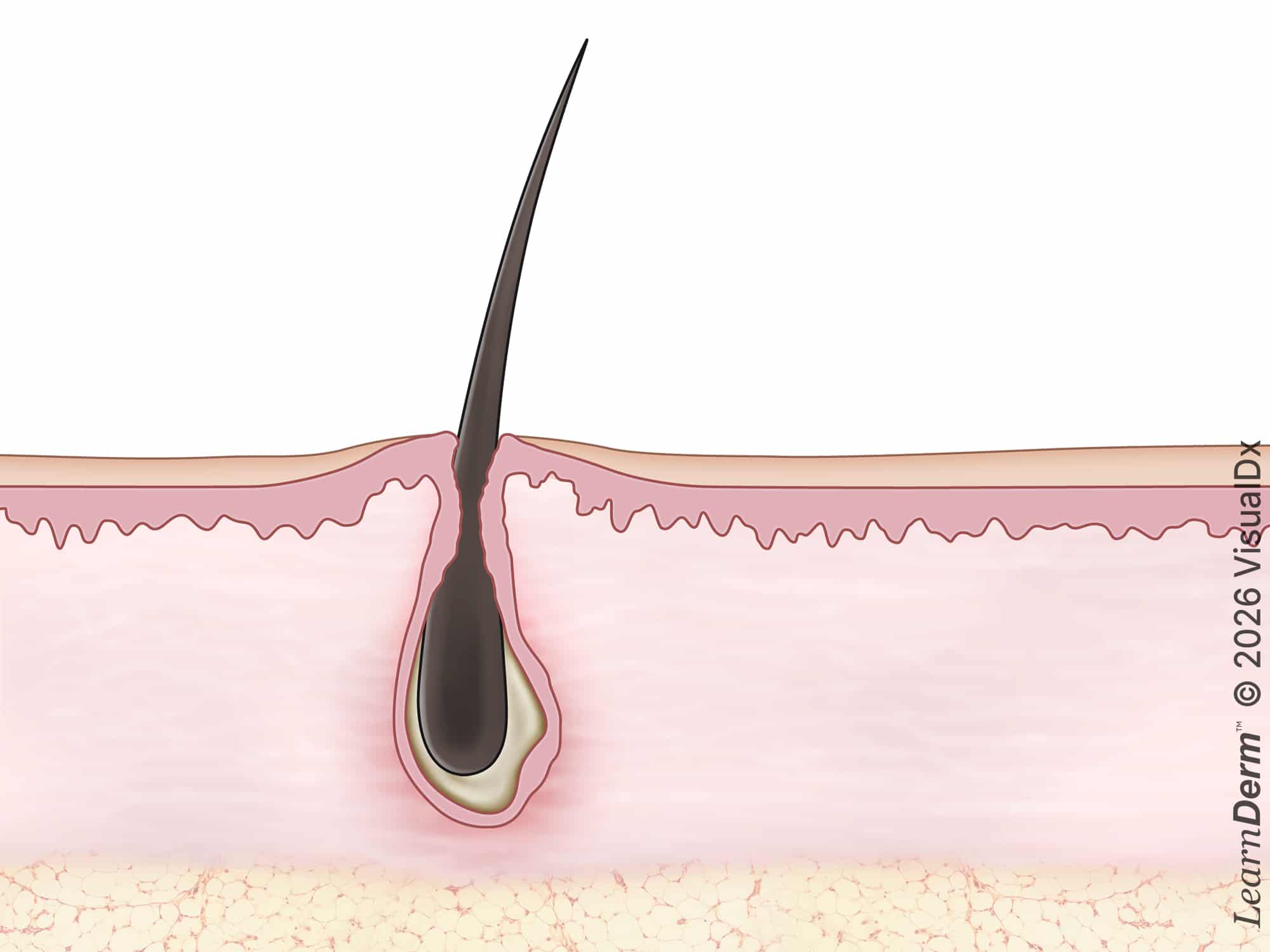
| Hurley I | One or more abscesses or inflammatory lesions without tunnels or characteristic scarring. | No tunnels or characteristic scars. |
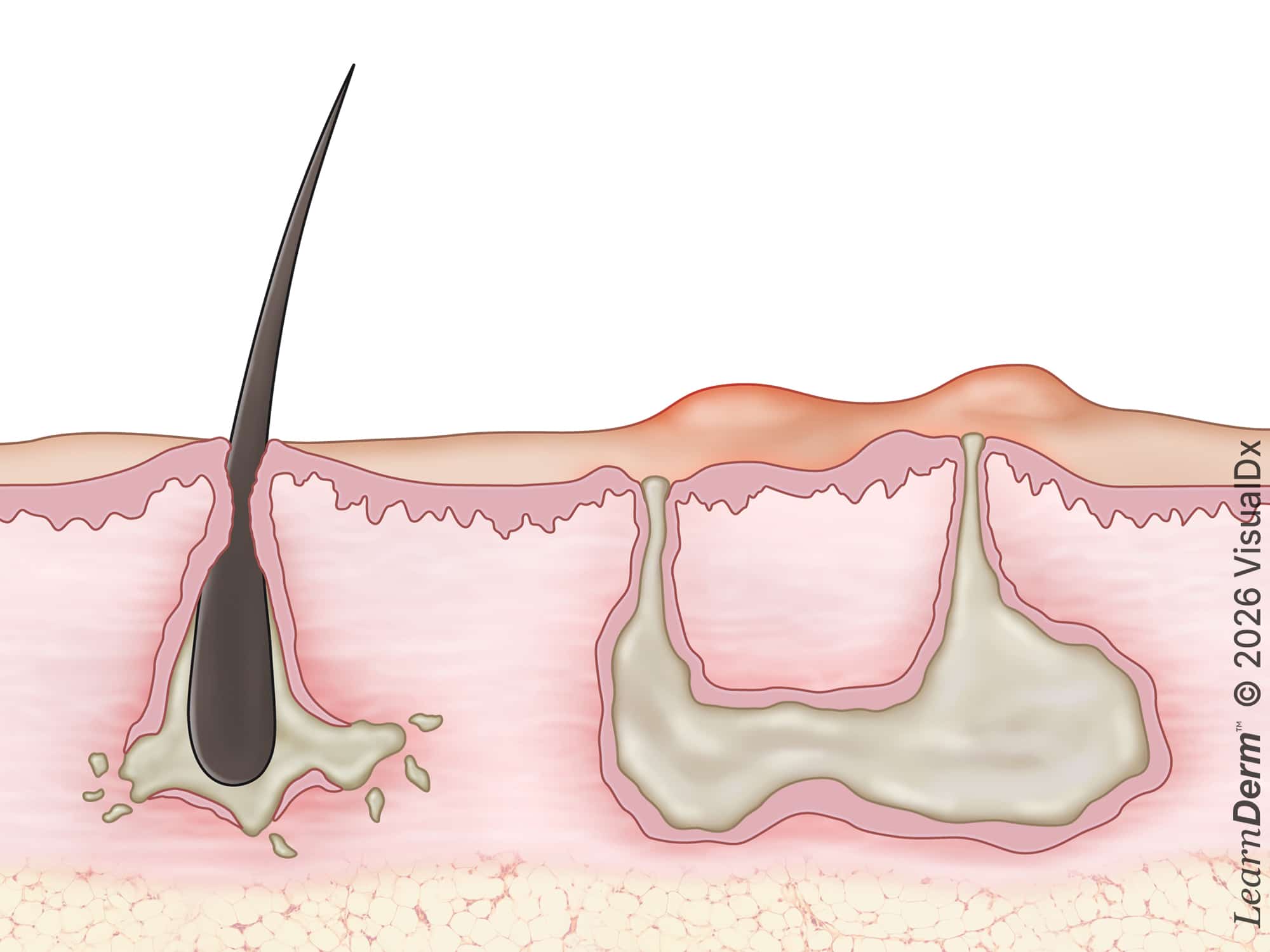
| Hurley II | Recurrent abscesses with tunnels and scarring. Lesions are separated by areas of uninvolved skin. | Structural disease is present but remains separated. |
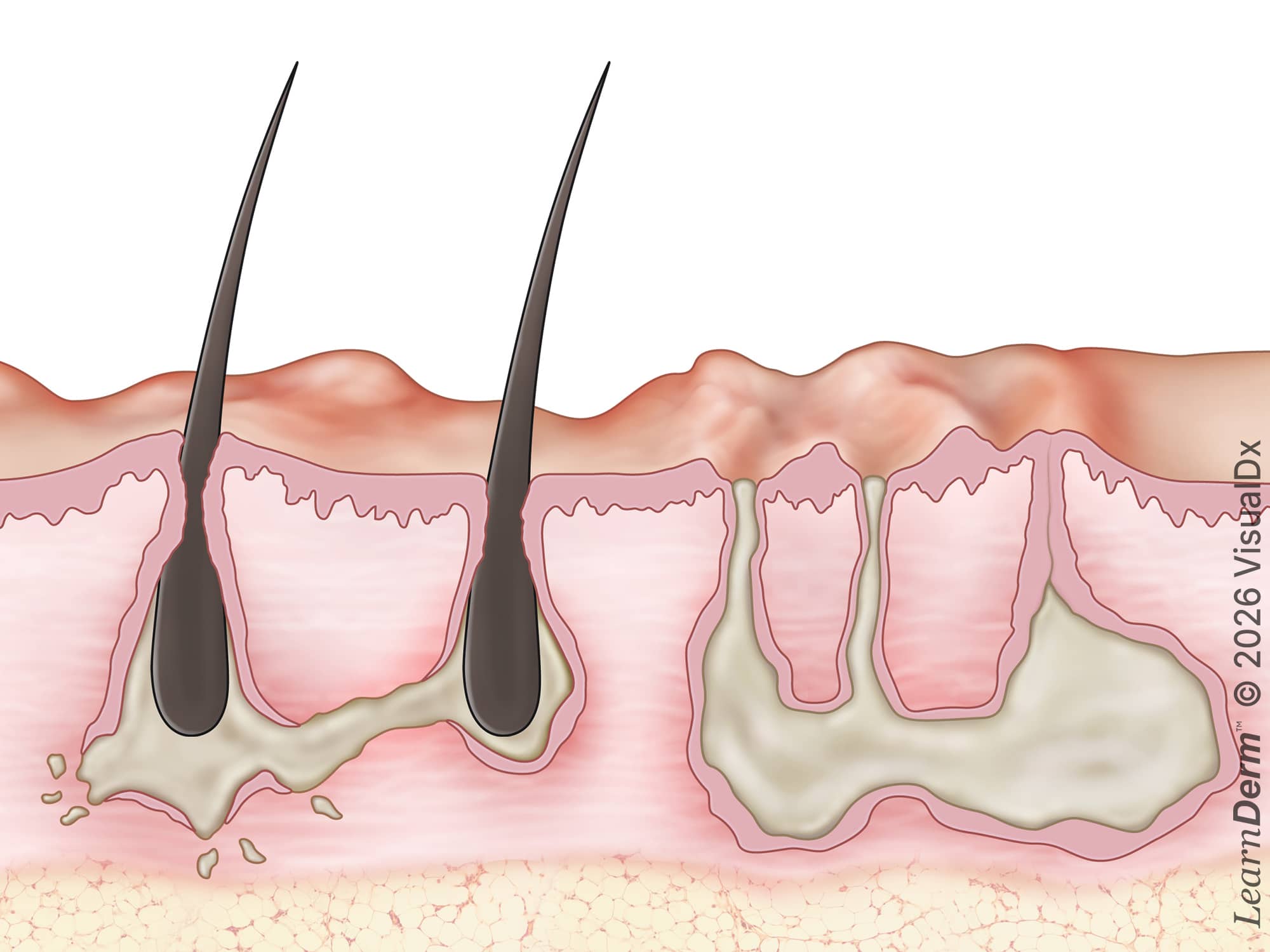
| Hurley III | Diffuse or near-diffuse involvement of an anatomic region with multiple interconnected tunnels and abscesses. | Interconnected disease spans most or all of the region. |
Strengths of Hurley staging
- Is familiar to many clinicians
- Can be applied quickly
- Communicates the extent of irreversible structural change
- May help inform procedural or surgical planning
- Does not require a detailed calculation
Limitations of Hurley staging
Hurley staging was not designed to measure dynamic inflammatory activity. Rather, it was designed to determine candidacy for surgery. A patient’s stage generally does not improve when active nodules or abscesses resolve because existing tunnels and scars remain, so Hurley stage cannot measure response to medical treatments.4
It may also underestimate clinically meaningful inflammatory disease. A patient with several painful, recurrent nodules but no tunnels may remain Hurley stage I despite substantial inflammatory and patient-reported burden. Conversely, a patient with old scars and inactive tunnels may be Hurley stage II but have little current inflammatory activity.
Recent guidance distinguishes active inflammatory disease from predominantly inactive structural disease. IHS4 can help characterize current inflammatory activity, while Hurley-based classification describes established structural damage.2
| Clinical pearl: Hurley staging helps answer, “How much structural damage has occurred?” It is less useful for answering, “How active is the disease today?” |
-

Hurley Stage I
-
Hurley Stage II
-
Hurley Stage III